
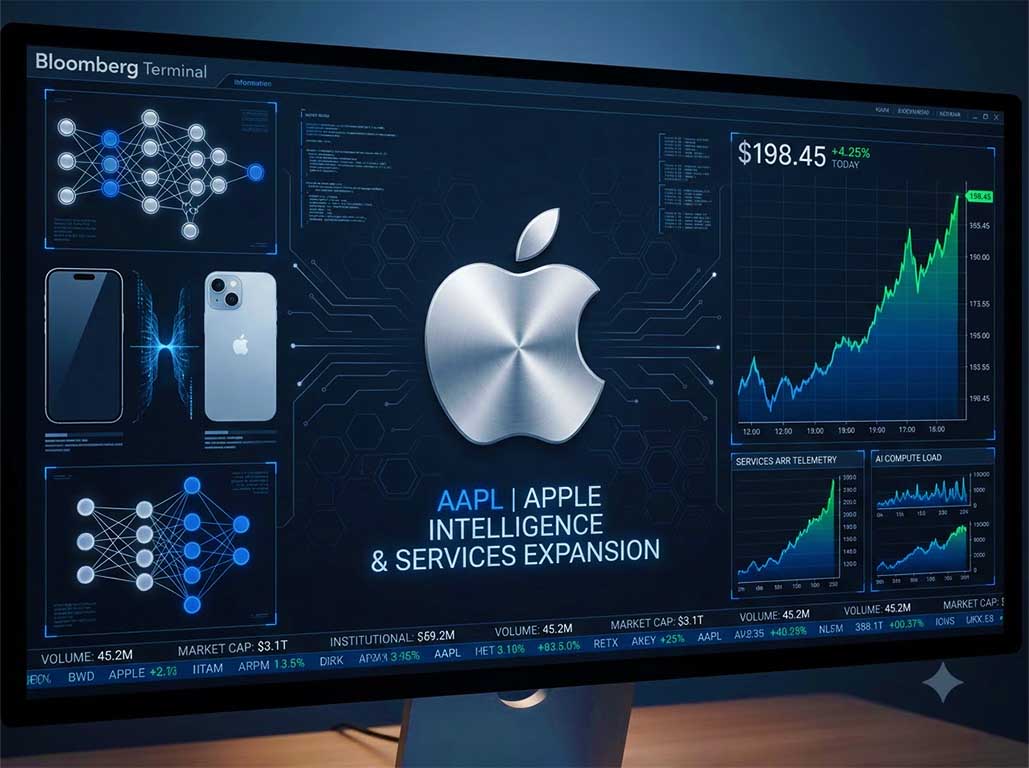
AAPL has successfully positioned on-device privacy-first artificial intelligence Apple Intelligence as the primary catalyst driving a multi-year iPhone upgrade supercycle. As hardware replacement cycles accelerate, Apple’s high-margin Services ecosystem compounds recurring revenue at historic gross margins.
1. AAPL Intelligence Triggers Multi-Year iPhone Upgrade Supercycle
First and foremost, Apple Intelligence represents the most compelling incentive for consumer hardware upgrades in nearly a decade. By restricting advanced generative AI capabilities (including Siri contextual awareness, Private Cloud Compute, and system-wide writing tools) to iPhone 15 Pro, iPhone 16, and newer Apple Silicon hardware, Apple creates a powerful replacement catalyst across an aging installed base.
Wall Street estimates suggest over 300 Million iPhones worldwide have not been upgraded in over three years. As consumers upgrade to access localized AI processing and extended battery efficiency, iPhone hardware revenue re-accelerates toward record highs, driving operating margin expansion across consumer electronics manufacturing supply chains.
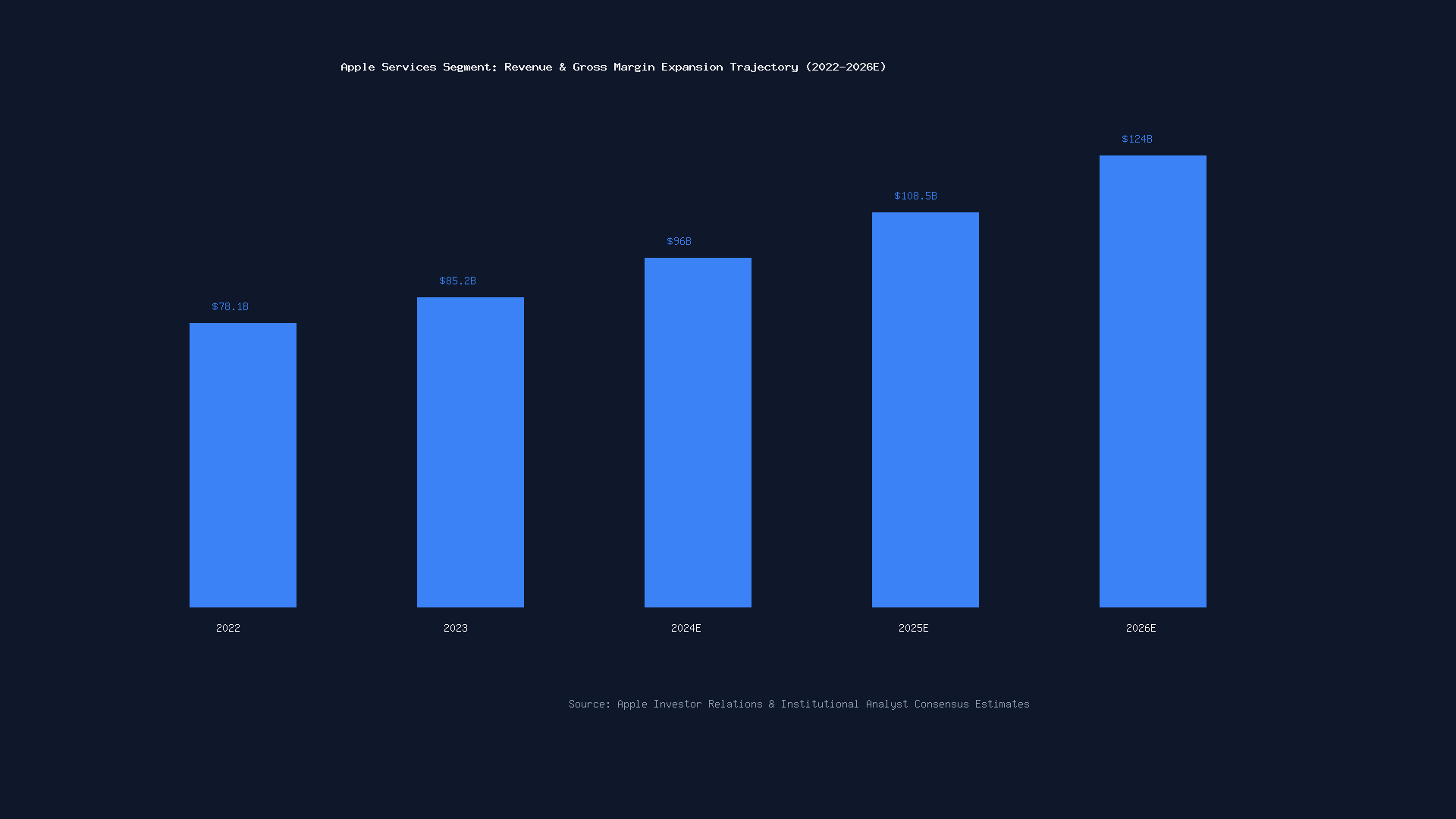
2. High-Margin Services Revenue Acceleration (74%+ Gross Margin) of AAPL
Secondly, Apple’s Services division comprising the App Store, iCloud+, Apple Pay, Apple Music, Apple TV+, and Licensing agreements has surpassed a $105 Billion annual run rate. Operating at gross margins exceeding 74%, the Services segment acts as a high-margin financial buffer that elevates overall corporate gross margins above 46%.
Every new device added to the 2.2 Billion active installed base increases ecosystem lock-in and lifetime customer value. Paid subscriptions across Apple platforms now exceed 1 Billion accounts, converting volatile hardware sales into highly predictable, software-like recurring cash flows.
3. Unrivaled Capital Return Program & Share Buyback Floor
Beyond hardware and software growth, Apple maintains the most aggressive shareholder capital return program in corporate history. Utilizing its immense free cash flow generation ($100B+ annually), Apple consistently repurchases $90B to $100B worth of its own shares each fiscal year while increasing dividend payouts for over 12 consecutive years.
This relentless share count reduction shrinks total diluted outstanding shares by 3% to 4% annually, boosting Earnings Per Share (EPS) growth even during periods of flat top-line revenue. For institutional equity investors, Apple’s massive buyback program provides an unbeatable structural valuation floor.
4. Spatial Computing & Long-Term Wearable Technology Moat
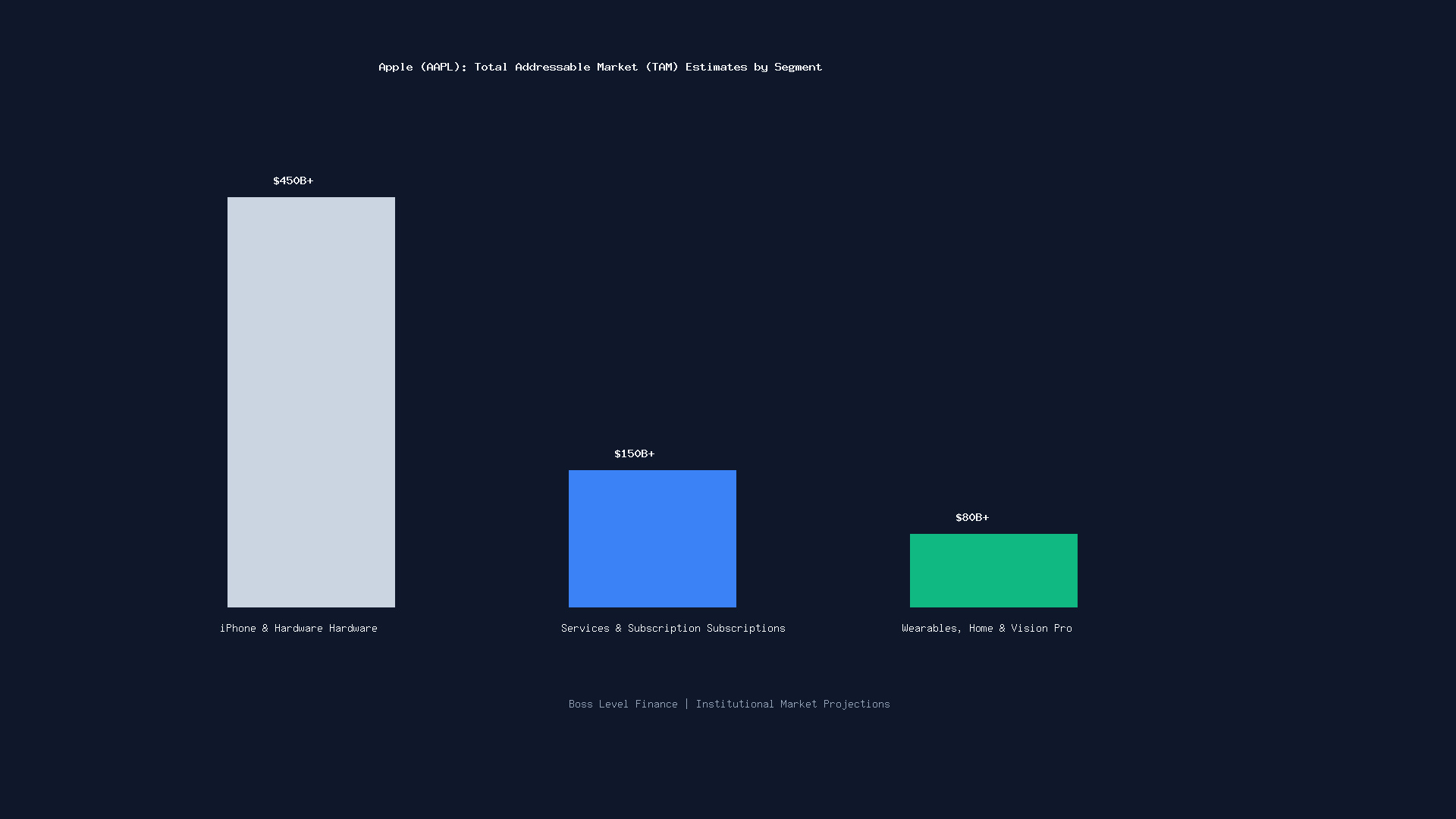
Looking toward long-term platform evolution, Apple’s investments in spatial computing (Vision Pro) and wearable tech (Apple Watch health sensors, AirPods audio hearing features) establish early market leadership in next-generation human-computer interfaces. As micro-OLED display costs decline and silicon efficiency improves, wearable spatial computing represents a multi-billion dollar long-term growth engine.
Furthermore, Apple’s vertical integration across custom M-series and A-series silicon ensures that competing hardware manufacturers cannot replicate Apple’s power efficiency and on-device neural processing speeds, solidifying Apple’s enterprise and consumer competitive moats.
Apple’s high-margin hardware ecosystem is reinforced by rising consumer demand across emerging markets in Asia and Latin America. As middle-class disposable income expands across international regions, premium smartphone market share shifts heavily toward Apple, driving incremental device activations and App Store ecosystem spending.
Institutional investors analyzing Apple’s long-term capital allocation recognize that Apple’s massive cash conversion cycle allows corporate management to execute tactical debt issuances at low corporate bond rates while preserving net cash reserves for strategic silicon R&D and supply chain diversification.
Investors tracking mega-cap tech leaders should also read our deep-dive research reports on Tesla (TSLA Stock) AI & Energy Expansion, Meta Platforms (META Stock) AI Ad Growth, Amazon (AMZN Stock) AWS Re-acceleration, and Microsoft (MSFT Stock) Cloud Expansion.
💡 Further Reading for Investors:
Want to master growth stock valuations and competitive moats?
Check out
The Intelligent Investor by Benjamin Graham – https://amzn.to/4huFG8x
One Up On Wall Street by Peter Lynch – https://amzn.to/4huFLJn
The Psychology of Money by Morgan Housel – https://amzn.to/4fWa9d2
Principles for Navigating Big Debt Crises by Ray Dalio – https://amzn.to/4fZGTCl