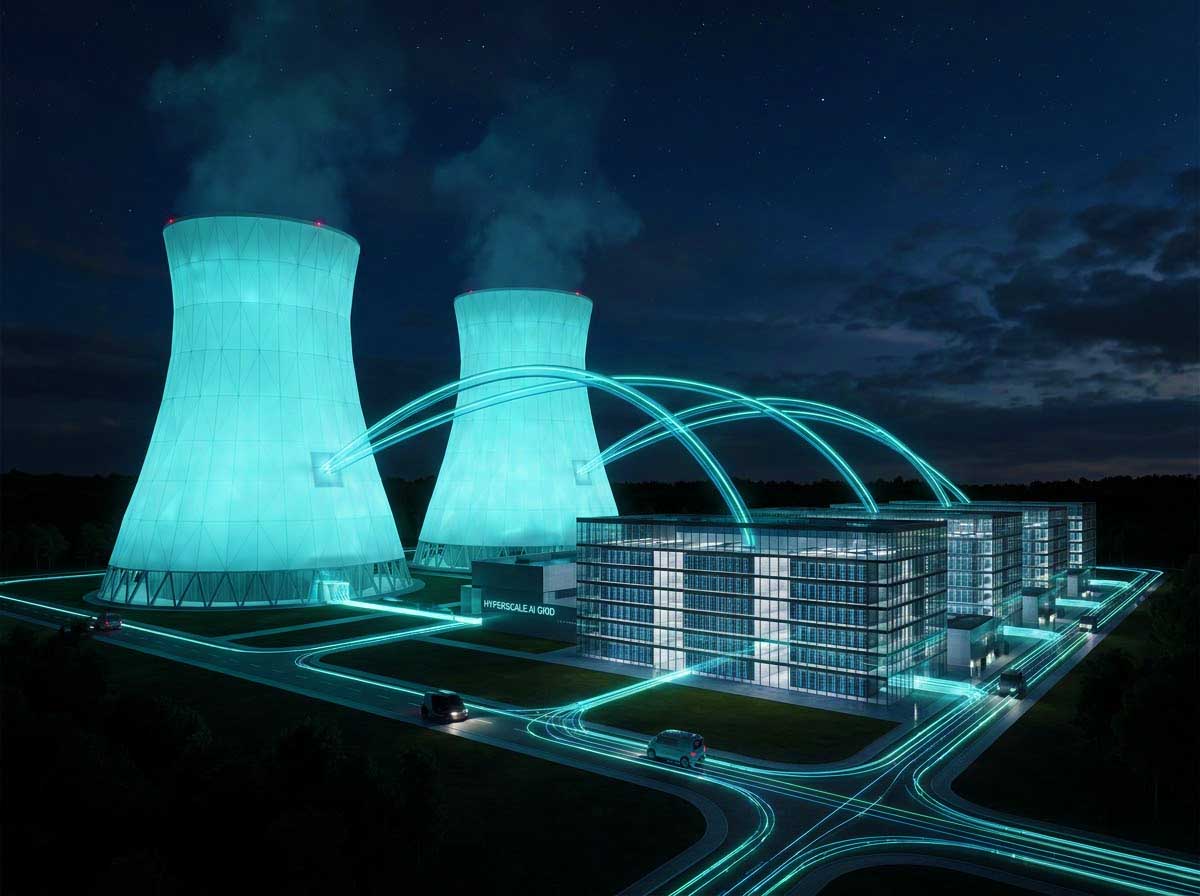
The artificial intelligence boom has collided directly with the reality of global electrical grids. As hyperscalers construct gigawatt-scale data center campuses, traditional power supplies are proving inadequate. Consequently, nuclear energy stocks have become the most unexpected winners of the modern technology revolution.
Tech titans including Microsoft, Amazon, and Google are signing multi-decade power purchase agreements with nuclear operators to secure round-the-clock, zero-carbon baseload electricity. In this comprehensive market analysis, we evaluate the nuclear renaissance and highlight the top public companies leading this energy transformation.
1. Why AI Data Centers Require Nuclear Baseload Power
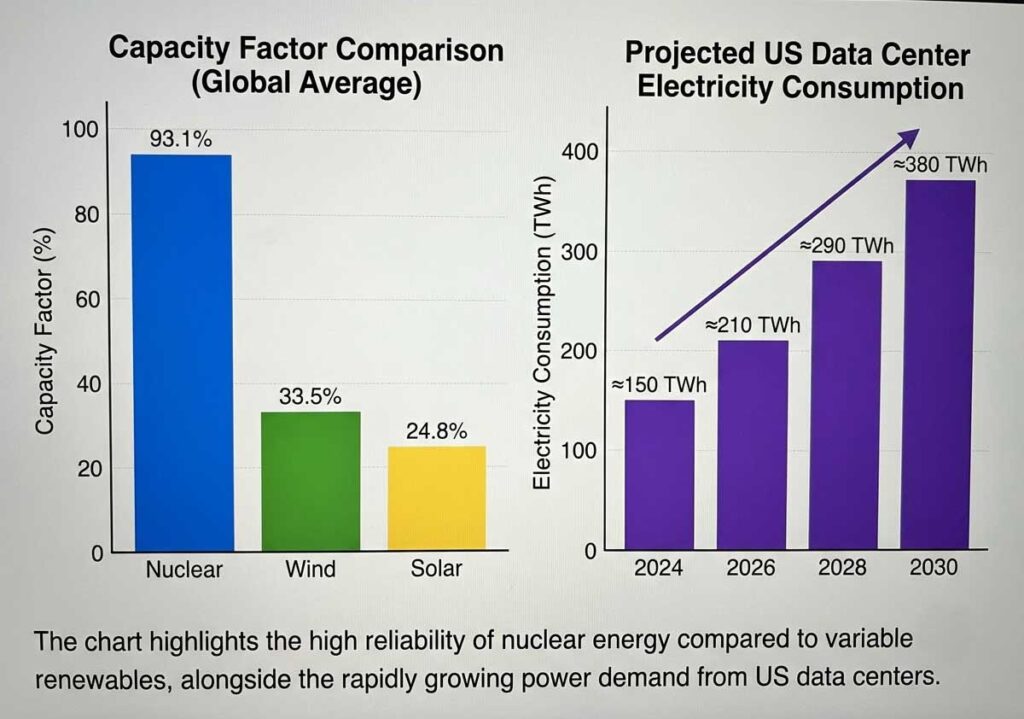
AI training and inference workloads operate continuously 24 hours a day, 7 days a week. While intermittent renewable sources such as wind and solar are expanding rapidly, they cannot provide the constant, uninterrupted baseload capacity required by modern enterprise server clusters without massive battery storage infrastructure.
Hyperscale tech companies have committed to strict net-zero carbon targets. Therefore, nuclear power is the only scalable energy source capable of delivering 99%+ capacity factor reliability with zero direct greenhouse gas emissions. As power constraints delay data center rollouts, demand for nuclear energy stocks continues to surge.
Interconnect queues for new power generation in major transmission regions (like PJM and ERCOT) stretch beyond five years. Consequently, existing nuclear plants capable of adding on-site colocation data centers possess an invaluable time-to-market advantage.
Factual Grid Metrics: The AI Power Crunch
| US Data Center Grid Share by 2030: | 9.1% of Total Generation |
| Nuclear Capacity Factor: | 93.1% (vs Solar 24.8%) |
| Landmark Power Deal: | CEG 20-Yr Microsoft Contract |
| Global SMR Capital Pipeline: | $45+ Billion |
2. Leading Public Nuclear Energy Stocks to Watch
Specific utility operators and technology pioneers possess distinct competitive advantages in this nuclear supercycle:
- Constellation Energy (CEG): The largest commercial nuclear operator in the United States, controlling over 22,000 megawatts of clean generation capacity with prime access to PJM grid data center corridors.
- Vistra Corp (VST): A diversified merchant generator with an extensive nuclear and natural gas fleet capable of delivering immediate high-voltage power to colocation hyperscalers.
- NuScale Power & Oklo: Pioneers developing Small Modular Reactors (SMRs) designed for decentralized on-site deployment directly adjacent to enterprise data centers.
Regulatory support in the US and Europe has strengthened considerably, with bipartisan legislation providing lucrative production tax credits for existing and newly commissioned nuclear facilities.
Uranium fuel supply contracts are firming up globally, ensuring long-term fuel security and price stability for commercial fleet operators.
3. Long-Term Investment Risks and Catalysts for Nuclear Energy
Investing in nuclear infrastructure involves understanding unique regulatory timelines and capital expenditure intensity. For instance, constructing new large-scale reactors requires significant permitting timeframes. However, extending the operating licenses of existing reactors and executing power uprates provides rapid, high-margin cash flow growth.
Sovereign governments are treating domestic nuclear capacity as critical national security infrastructure, providing subsidized financing, loan guarantees, and regulatory streamlining.
Ultimately, the convergence of artificial intelligence computing demand and global decarbonization mandates guarantees that nuclear energy stocks will play a central role in modern investment portfolios throughout the coming decade.
4. Actionable Portfolio Allocation for Nuclear Energy
Focus primarily on established merchant generators with active, grid-connected nuclear capacity. For example, operators like Constellation Energy and Vistra can monetize immediate power demand years ahead of new reactor builds.
Allocate a smaller, speculative position toward Small Modular Reactor (SMR) pioneers and uranium fuel suppliers. While commercialization timelines require patience, long-term supply constraints offer asymmetric upside potential.
Recognize that the AI power bottleneck is a multi-decade structural trend. Consequently, holding nuclear energy stocks provides rare exposure to both clean energy transition mandates and global technological growth.
You Might also find this post insightful – ExxonMobil: Is This 3.5% Dividend Yield a Strong Buy?
Frequently Asked Questions
Why can’t AI data centers just run on solar and wind?
Solar and wind generation depend on weather conditions and produce electricity intermittently. AI data centers operate around the clock at maximum capacity and require 99.999% uptime, making steady nuclear baseload power indispensable.
Are Small Modular Reactors (SMRs) already commercially active?
While early commercial SMR demonstration projects are currently undergoing final NRC licensing and pilot builds, full commercial rollouts across major utility grids are expected between 2027 and 2030.
Authoritative Financial Sources & Disclosures
For official filings, macroeconomic data, and regulatory disclosures, reference the U.S. Securities and Exchange Commission (SEC), the Federal Reserve System, and official corporate investor relations releases.