Wondering how the Fed interest rate decision affects the stock market? Discover why the July 29 pause is likely and what it means for your portfolio.
Last Updated: July 24, 2026
Data Checked: Figures verified as of July 2026
Direct Answer: Will the Fed Pause on July 29?
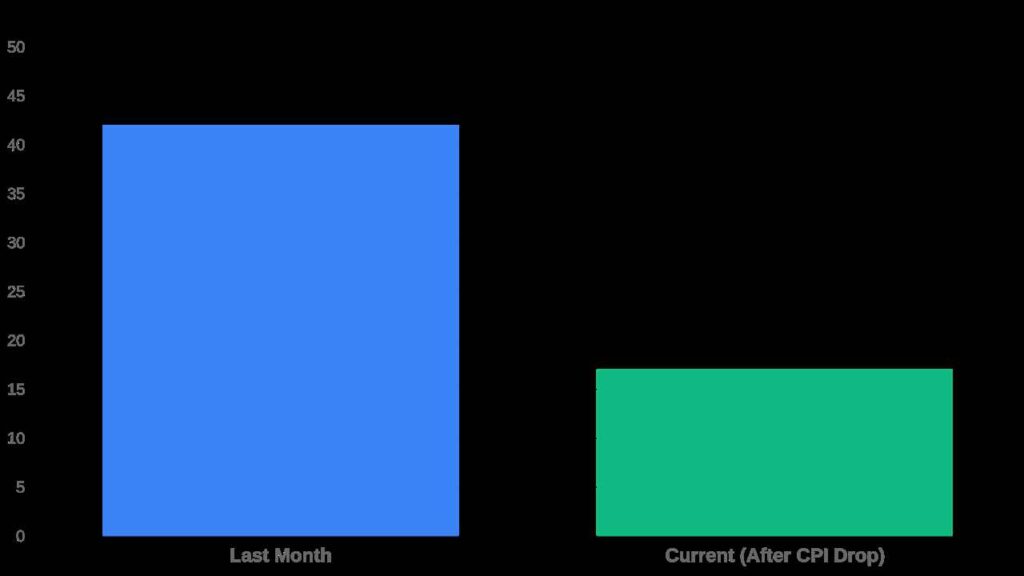
If you are wondering whether the Federal Reserve will pause interest rate hikes at the July 29, 2026 meeting, the direct answer is a resounding “highly likely.” Specifically, following the shocking 0.4% drop in June inflation data, the market probability of a rate hike completely collapsed. Previously, Wall Street priced the odds at 42%. However, currently, the Fed rate hike probability sits at a massive low of just 17%. Consequently, investors are acting fast. Therefore, if the Fed confirms this pause, we will likely see a massive rally in growth stocks and a continued boom in bank earnings. Let me explain the simple mechanics below.
The Big Inflation Drop: Why the Fed is Changing Course
To understand the Fed’s next move, we must look at the recent inflation data. Historically, the Federal Reserve raises interest rates when the economy runs too hot, specifically when inflation spirals out of control.
However, thanks to a recent U.S.-Iran ceasefire in the Strait of Hormuz, global energy prices plummeted. As a result, gasoline became cheaper. Because gasoline affects the transportation of almost all consumer goods, the overall headline Consumer Price Index (CPI) cooled down to 3.5%. Therefore, the Federal Reserve—led by Fed Chair Kevin Warsh—no longer has a desperate reason to crush the economy with high borrowing costs. Consequently, they have breathing room to execute a pause.
How Does the Fed Interest Rate Decision Affect the Stock Market?
If you are new to investing, you might ask: how does Fed interest rate decision affect stock market valuations?
Essentially, interest rates act like gravity for stock prices. When interest rates are very high, major corporations cannot borrow money cheaply to expand their businesses. Furthermore, investors prefer keeping money safely in 5% yielding bank CDs rather than taking a risk in the stock market.
Conversely, when the Fed pauses or cuts rates, that financial gravity disappears. Specifically, companies can borrow cash easily, allowing them to hire more people and build new factories. Moreover, because bank savings accounts suddenly yield less, investors move their cash back into stocks to chase higher returns. Therefore, a rate pause acts as rocket fuel for the stock market.
What Does This Mean for Your Loans and Mortgages?
Another massive question is how this affects everyday consumer debt. Specifically, the Federal Open Market Committee (FOMC) dictates the base rate for all credit.
As a result, if the Fed confirms a pause on July 29, you will likely see a stabilization in mortgage rates. Historically, when the bond market senses a long-term pause, mortgage lenders slowly lower their 30-year fixed rates. Furthermore, auto loans and credit card annual percentage rates (APRs) will stop getting more expensive. Thus, a pause is incredibly beneficial for middle-class consumers holding variable debt.
What Could Prove This Analysis Wrong?
As disciplined investors, we must always consider what could break our thesis. Two core events could force the Fed to raise rates aggressively, proving a pause incorrect:
- A sudden spike in oil prices: If geopolitical tensions flare up again in the Middle East, energy costs will skyrocket. Consequently, inflation will rebound, forcing Kevin Warsh to hike rates regardless of the June data.
- A massive surge in U.S. consumer spending: If retail sales explode to record highs, businesses will raise prices. Therefore, the Fed might hike rates to cool down demand.
Your Investment Game Plan
Ultimately, nobody can predict the future with 100% certainty. However, the data strongly supports a July 29 rate pause. If you are a beginner looking to capitalize on this shift, consider analyzing robust, proven U.S. index funds.
Because stock markets can be notoriously volatile around FOMC meetings, do not go “all-in” on one day. Firstly, deploy your capital slowly using Dollar-Cost-Averaging (DCA). Secondly, keep building your knowledge of macroeconomics before risking your hard-earned money.
👉 You Might also find this post insightful – https://bosslevelfinance.com/inflation-drop-warning-the-new-cash-strategy
If you are ready to start investing in the U.S. or Indian markets, you can use the trusted platforms below to secure a signup bonus:
👉 Use referral link for Groww – https://app.groww.in/v3cO/dqzy2ejb
👉 Use referral link for Zerodha – https://zerodha.com/open-account?c=HWR050
👉 Use referral link for Vested (For investing in US market) – https://refer.vestedfinance.com/RUKU88007
Disclaimer & Financial Disclosure
DISCLAIMER: THIS IS ONLY ANALYSIS AND WE DO NOT ENCOURAGE USERS TO BUY, SELL, OR HOLD. THE STOCK MARKETS ARE SUBJECT TO CHANGE. DO YOUR OWN DUE DILIGENCE. The author has no direct political or insider affiliations with the Federal Reserve.
💡 Further Reading for Investors:
Want to master growth stock valuations and competitive moats?
Check out
The Intelligent Investor by Benjamin Graham – https://amzn.to/4huFG8x
One Up On Wall Street by Peter Lynch – https://amzn.to/4huFLJn
The Psychology of Money by Morgan Housel – https://amzn.to/4fWa9d2
Principles for Navigating Big Debt Crises by Ray Dalio – https://amzn.to/4fZGTCl
Sources:
