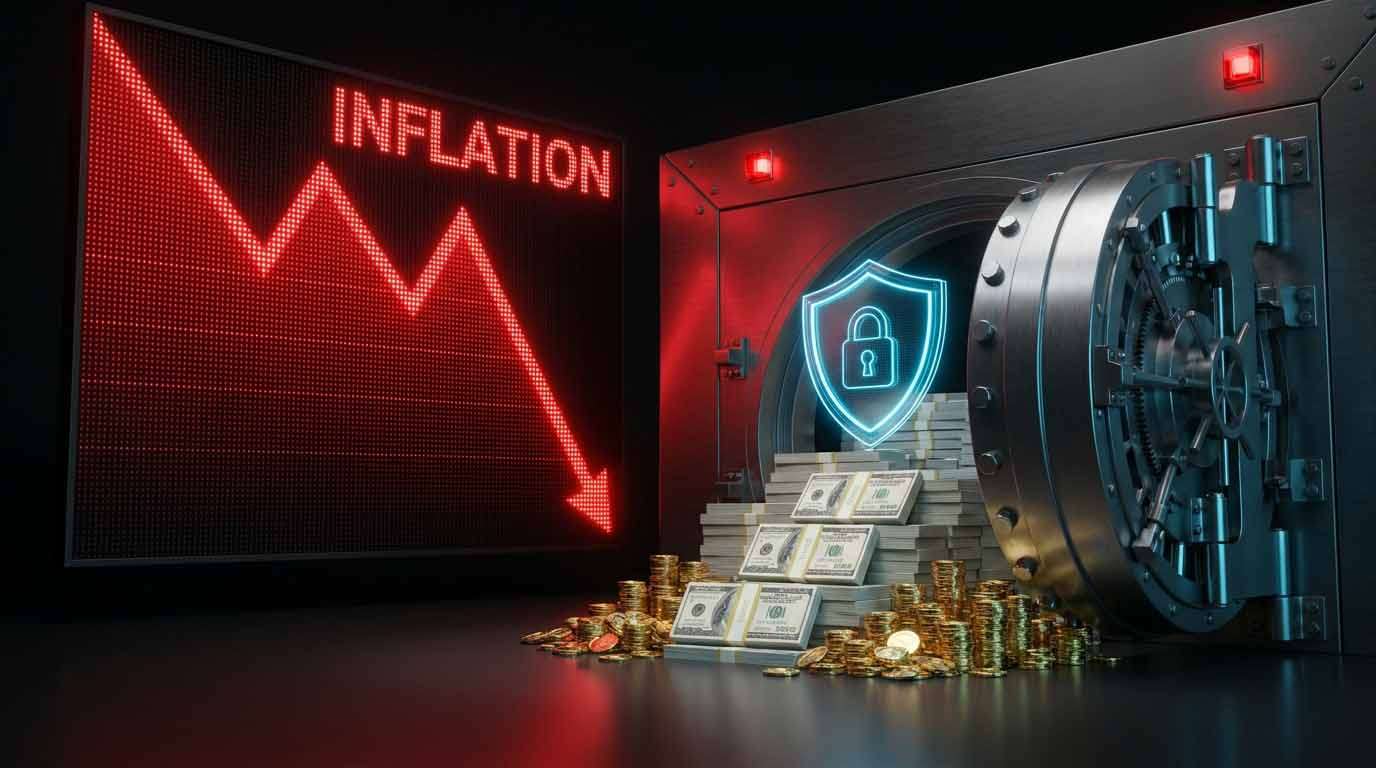
With US inflation dropping to 3.5%, high-yield assets are about to shift. Discover the best cash strategy pivots for late 2026 inside.
Last Updated: July 15, 2026
Data Checked: Figures verified as of July 14, 2026
Read time: 3 mins
What to Do with Cash as Inflation Cools
If you are wondering what to do with your cash now that US inflation has cooled to 3.5%, the direct answer is to lock in high yields immediately. Specifically, because headlines CPI dropped unexpectedly by 0.4% in June, the Federal Reserve is highly likely to pause interest rate hikes at their July 29 meeting. Consequently, the high 5% yields currently offered on savings accounts and CDs are about to decline rapidly. Therefore, you must pivot your capital into fixed-rate assets before yields drop. Let us dissect the best low-risk moves step-by-step.
Why the 3.5% Inflation Drop Changes Your Cash Strategy
To understand this shift, we must look at how the Federal Reserve controls savings yields. Historically, when inflation was rising, the Fed hiked interest rates. Consequently, banks raised their High-Yield Savings Account (HYSA) rates to attract depositors.
However, now that annual inflation has cooled down to 3.5%, the pressure to raise interest rates has disappeared. In fact, major markets are now pricing in a rate pause rather than a hike. Therefore, if you keep your money sitting in a basic savings account, your interest income will start shrinking over the next few months. Thus, dynamic updates to your cash strategy are now required to prevent your cash from losing earning power.
Beginner Guide: What to Do With Cash When Interest Rates Fall?
If you are new to investing, you might ask: what to do with cash when interest rates fall. Why does this happen?
Essentially, when central banks lower rates, all floating-rate financial products yield less interest. For instance, your standard savings account rates will drop almost instantly. On the other hand, fixed-rate products will maintain their high payouts until they mature.
Therefore, the main goal during a rate decline is to lock in yield. By transferring your floating cash into fixed-rate instruments, you protect your monthly income. Consequently, you guarantee yourself high interest earnings even if the broader market rates drop to zero. Ultimately, this protects your wealth from eroding during monetary easing.
Is a High-Yield Savings Account Safe in Late 2026?
Another common query investors ask is: is high yield savings account safe if Fed cuts rates.
To explain in simple words, yes, your money remains completely secure. Specifically, as long as your account is held in an FDIC-insured bank, your deposits are insured up to $250,000. Therefore, the risk is not that you will lose your capital; rather, the risk is that your yield will change.
Specifically, because HYSA interest rates are variable, they are not guaranteed. As a result, your 5% yield could easily drop to 3% by next year. Consequently, while HYSAs are excellent for emergency funds, they are not the best tool for building long-term wealth when interest rates are falling.
The Best Cash Strategy Pivots for Low-Risk Investors
So, how should you reallocate your capital? Personally, I recommend keeping your approach simple. Currently, two primary paths stand out for executing a revised cash strategy today.

Option A: Locking in Yields via Multi-Year CDs
Firstly, you can look at Certificates of Deposit (CDs). Specifically, unlike variable accounts, a CD locks in your interest rate for a set period. If you grab a 5% CD today, the bank must pay you 5% until the agreement ends. Even if the Fed drops interest rates next month, your yield remains untouched. Therefore, locking in a 1-year or 2-year CD is an excellent way to guarantee stable cash flow.
Option B: Transitioning Capital into Short-Term Treasury Bonds
Secondly, you should consider short-term US Treasury Bills. Historically, treasury bonds represent the safest asset class in the global financial system. Because they are backed by the US government, default risk is virtually non-existent. Currently, 3-month and 6-month treasuries yield high interest. Moreover, they are exempt from state and local taxes, making them highly tax-efficient. Thus, they represent one of the best low risk investments for late 2026.
What Could Prove This Cash Strategy Wrong?
As disciplined investors, we must always analyze what could go wrong with our plan. Specifically, two main macro events could prove this cash strategy incorrect:
- A sudden rebound in oil prices: If the Strait of Hormuz ceasefire collapses and oil prices spike, inflation could shoot back up to 4.5%. Consequently, the Fed would be forced to raise interest rates again, making early fixed CDs less attractive.
- Labor market overheating: If U.S. employment growth hits record highs, consumer spending will increase, causing inflation to stay sticky and preventing any near-term rate drops.
Compliance & Personal Finance Disclaimer
DISCLAIMER: THIS IS ONLY ANALYSIS AND WE DO NOT ENCOURAGE USERS TO BUY, SELL, OR HOLD. THE STOCK MARKETS ARE SUBJECT TO CHANGE. DO YOUR OWN DUE DILIGENCE. Variable interest rates fluctuate based on Federal Reserve policy decisions.
You may also like – SKHYV Stock: What You Must Know Now
If you want to start executing your local investment payouts or setup your brokerage, use the links below to secure signup rewards:
👉 Use referral link for Groww – https://app.groww.in/v3cO/dqzy2ejb
👉 Use referral link for Zerodha – https://zerodha.com/open-account?c=HWR050
👉 Use referral link for Vested (For investing in US market) – https://refer.vestedfinance.com/RUKU88007
💡 Further Reading for Investors:
Want to master growth stock valuations and competitive moats?
Check out
The Intelligent Investor by Benjamin Graham – https://amzn.to/4huFG8x
One Up On Wall Street by Peter Lynch – https://amzn.to/4huFLJn
The Psychology of Money by Morgan Housel – https://amzn.to/4fWa9d2
Principles for Navigating Big Debt Crises by Ray Dalio – https://amzn.to/4fZGTCl
Sources:
- U.S. Bureau of Labor Statistics June CPI Report
- Federal Reserve Board FOMC Policy Statements
- FDIC Deposit Insurance Information Database

Pingback: The Truth About the Fed Rate Pause Now - Boss Level Finance