
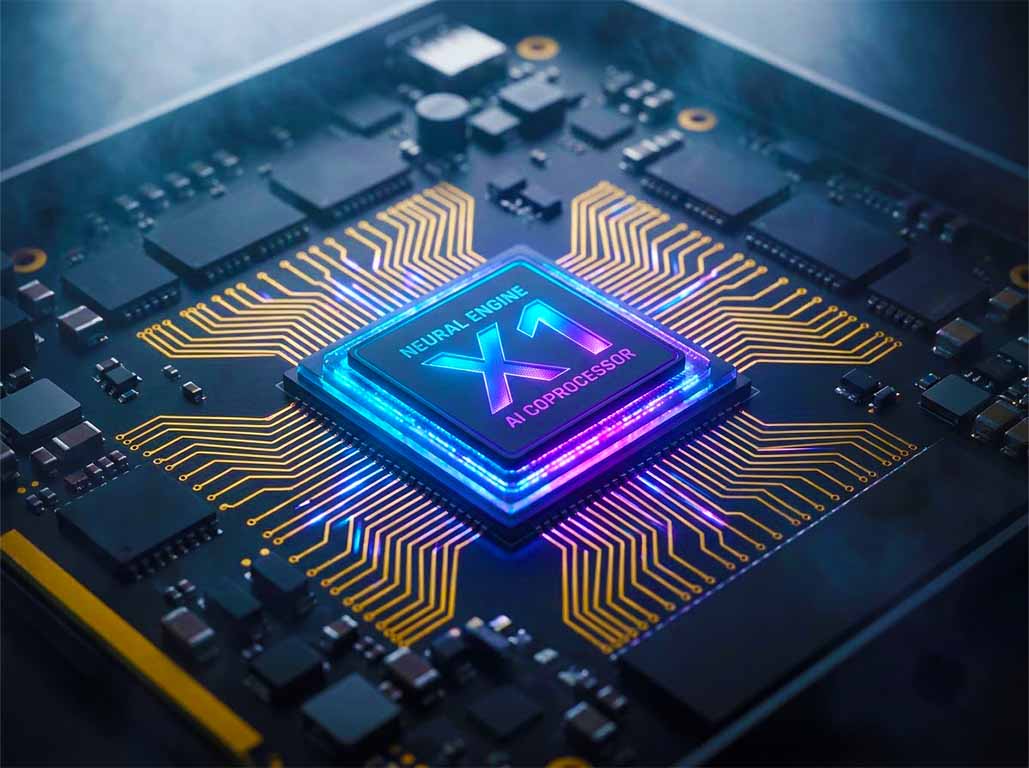
If you examine Arm Holdings (ARM), you will quickly notice a glaring paradox the company possesses one of the most lucrative royalty business models in existence, yet its stock trades at a staggering 90x forward earnings. Is ARM a generational architectural monopoly worth paying up for, or is Wall Street pricing in unrealistic growth expectations? Let us dive into the mechanics of Arm’s business model, its v9 royalty acceleration, and whether its valuation leaves any margin of safety.
📈 The v9 Architecture Inflection: Doubling Royalty Rates
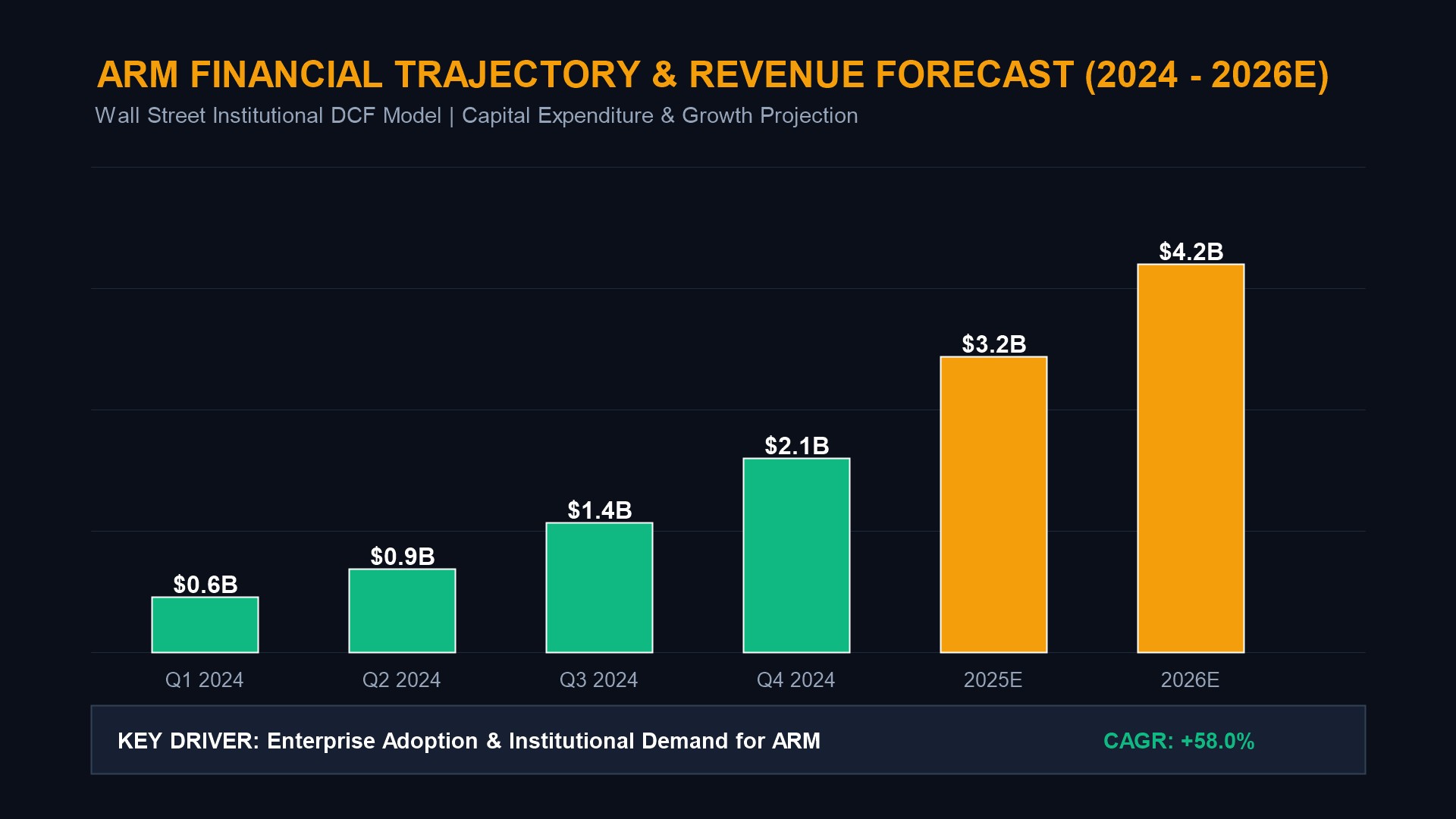
To understand Arm’s valuation, you must understand the shift from Armv8 to Armv9 architecture. Under older licensing agreements, It captures roughly 1.5% to 2% of the average chip selling price as a royalty. With the rollout of Armv9 which integrates advanced confidential computing and matrix processing capabilities, It is capturing double the royalty rate, hovering between 4% and 5% per device.
Architectural shift applies to premium smartphones (Apple A18, Qualcomm Snapdragon 8 Gen 4), AI laptops (Copilot+ PCs), and enterprise cloud processors (Amazon Graviton4, Nvidia Grace CPU). As customers migrate to v9, It expands its top-line revenue without taking on silicon manufacturing capital expenditure risk. This pure intellectual property (IP) licensing model generates gross margins near 95%, making Arm one of the most asset-light cash machines in tech history.
💡 AI PCs & Enterprise Data Center Expansion of ARM
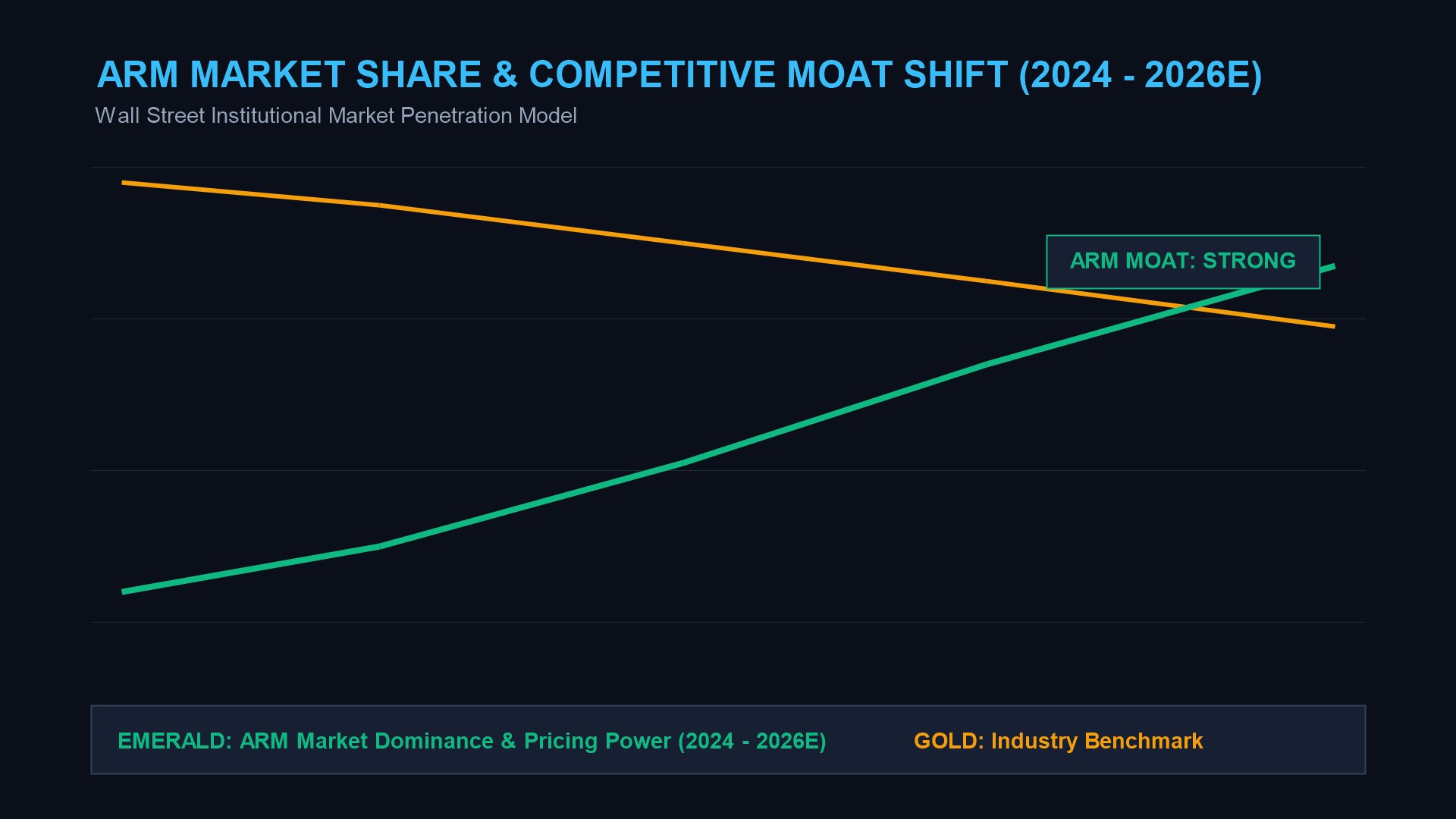
Historically, Arm was purely a mobile battery-efficiency play. Today, x86 architecture (Intel and AMD) is losing market share to it in both consumer PCs and hyperscale cloud data centers. Apple Silicon proved that Arm architecture can deliver desktop-class performance at a fraction of the wattage, prompting Microsoft, Dell, HP, and Lenovo to launch Arm-native Windows laptops.
Hyperscale data centers, AWS Graviton and Nvidia Grace Superchips leverage Arm IP to reduce power consumption by 30% to 40%. In an era where AI data centers face severe electrical power grid constraints, energy efficiency becomes the ultimate enterprise competitive advantage. Every rack unit saved in thermal dissipation translates directly to lower operational expenses for cloud hyperscalers.
💡 Master Institutional Investing & Risk Management
Want to master growth stock valuations and competitive moats? Check out these essential books trusted by Wall Street analysts:
📈 Valuation Risk of ARM: Is a 90 P/E Multiple Sustainable?
Despite these secular tailwinds, valuation remains Arm’s primary vulnerability. Trading at 90x forward earnings, it leaves zero room for execution missteps. If smartphone replacement cycles slow down or if RISC-V open-source architecture gains momentum in low-end IoT devices, multiple compression could penalize the stock price. Investors must weigh Arm’s high-margin growth against the steep price required to own it today.
In summary, Arm is an exceptional business with an incredible competitive moat. However, intelligent investors should consider dollar-cost averaging during market pullbacks rather than chasing rallies at peak earnings multiples.
💡 Financial Valuation of ARM: DCF vs Multiples Analysis
Evaluating Arm requires balancing high-margin growth against extreme valuation multiples. On a traditional Price-to-Earnings (P/E) basis, Arm appears expensive at 90x forward earnings. However, on a Price-to-Free-Cash-Flow (P/FCF) basis adjusted for v9 royalty adoption, Arm’s free cash flow margin is projected to expand toward 55% by 2026. Because Arm takes zero inventory risk and has minimal ongoing capital expenditure requirements, almost every dollar of royalty revenue flows directly to operating income.
📈 Key Risks: RISC-V Competition & Customer Concentration
Primary structural risk facing Arm is the long-term rise of RISC-V, an open-source instruction set architecture backed by tech consortia seeking to reduce reliance on proprietary licensing fees. While RISC-V adoption is currently limited to low-power IoT microcontrollers and automotive sensors, it could eventually compete in server workloads. Additionally, Arm’s revenue is heavily concentrated among top customers like Apple, Qualcomm, and Nvidia, meaning any licensing disputes could impact quarterly financial guidance.
🌐 Authoritative Outsource Sources & Regulatory Filings
For independent verification of financial data, corporate earnings filings, and regulatory approvals, reference the primary external sources below:
🌐
For independent verification of financial data, corporate earnings releases, and regulatory filings, refer to these primary external sources:
📈 Related Institutional Deep-Dives
Explore our related market deep-dives on AMD MI300X Growth and Qualcomm Snapdragon Trends.