

Additionally, Bitcoin continues to consolidate following its 4th halving cycle, spot ETF institutional integration, and expanding global macroeconomic liquidity. As central banks navigate high national debt levels and shift toward monetary easing, digital assets are increasingly evaluated by institutions as a scarce hedge against fiat currency inflation.
While short-term crypto price volatility remains characteristic of the asset class, structural supply-and-demand dynamics indicate a multi-year institutional accumulation phase. In this analytical report, we break down 3 critical macro triggers that could propel Bitcoin past $100,000 in 2026
You Might Also Like: 7 Bitcoin ETF Secrets Every Crypto Investor Must Know
1. Institutional In addition, spot ETF Accumulation & Sovereign Reserves
The introduction of regulated spot Bitcoin ETFs marked a permanent structural change in crypto market structure. Spot ETFs allow institutional wealth managers, pension funds, registered investment advisors (RIAs), and corporate treasuries to gain direct Bitcoin exposure within traditional brokerage accounts.
Net cumulative inflows into spot ETFs have consistently absorbed daily mined Bitcoin supply by a factor of 3x to 5x. As advisory firms complete 12-to-24 month due diligence windows and begin allocating 1% to 3% portfolio percentages to digital assets, institutional demand creates a sustained bid under market prices.
2. Furthermore, global M2 Money Supply Expansion & Fiat Debasement
Historically, Bitcoin price cycles exhibit a high positive correlation (above 90%) with changes in Global M2 Money Supply. When global central banks expand their balance sheets and increase money supply to service national debt obligations, scarce liquid assets experience significant price appreciation.
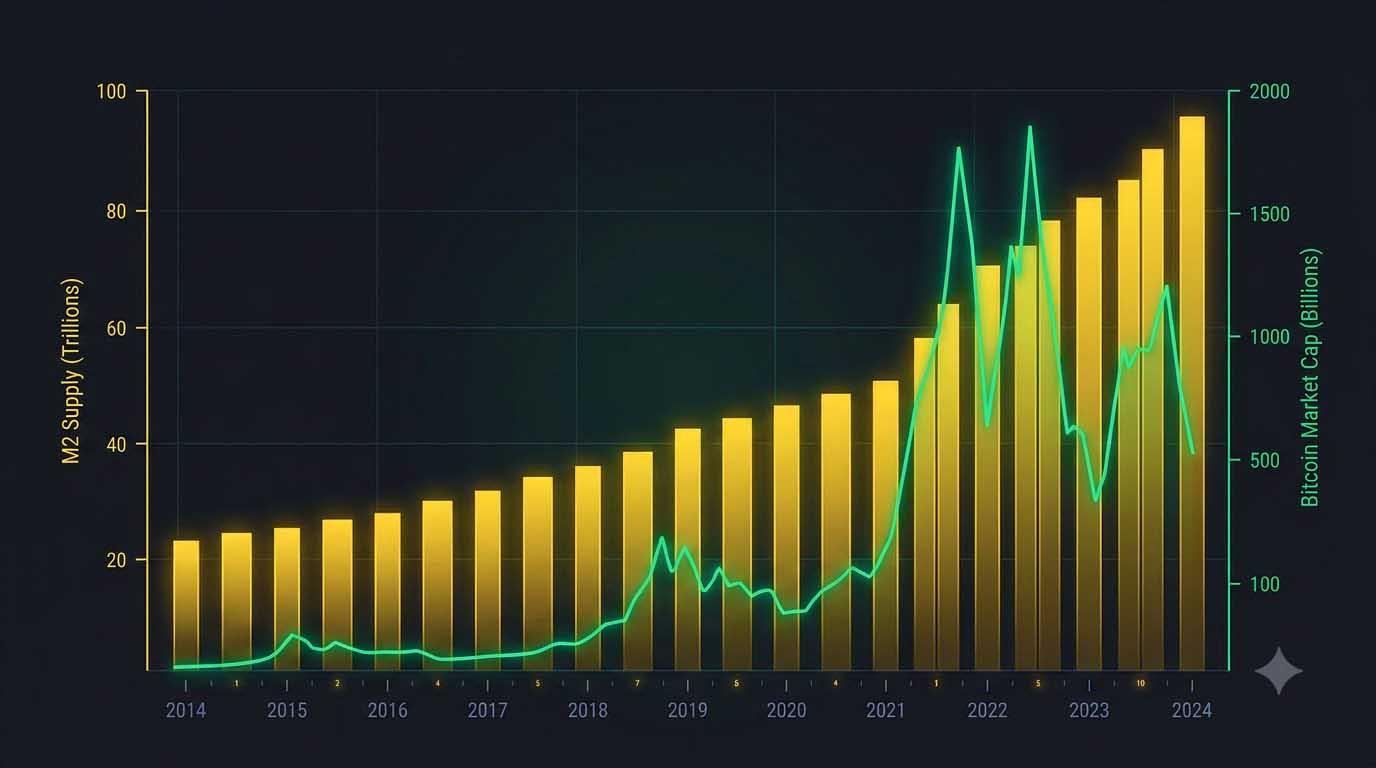
With global M2 growth re-accelerating alongside central bank rate cuts, Bitcoin functions as a sovereign-neutral liquid asset with an immutable hard cap of 21 million coins, protecting purchasing power during inflationary cycles.
3. Post-Halving Supply Squeeze Lag Effect
The 4th Bitcoin Halving permanently cut daily block rewards from 6.25 BTC to 3.125 BTC per block, reducing annual supply inflation below 0.8%. Historical data across prior halving cycles shows that the true supply-demand imbalance manifests 12 to 18 months post-halving.
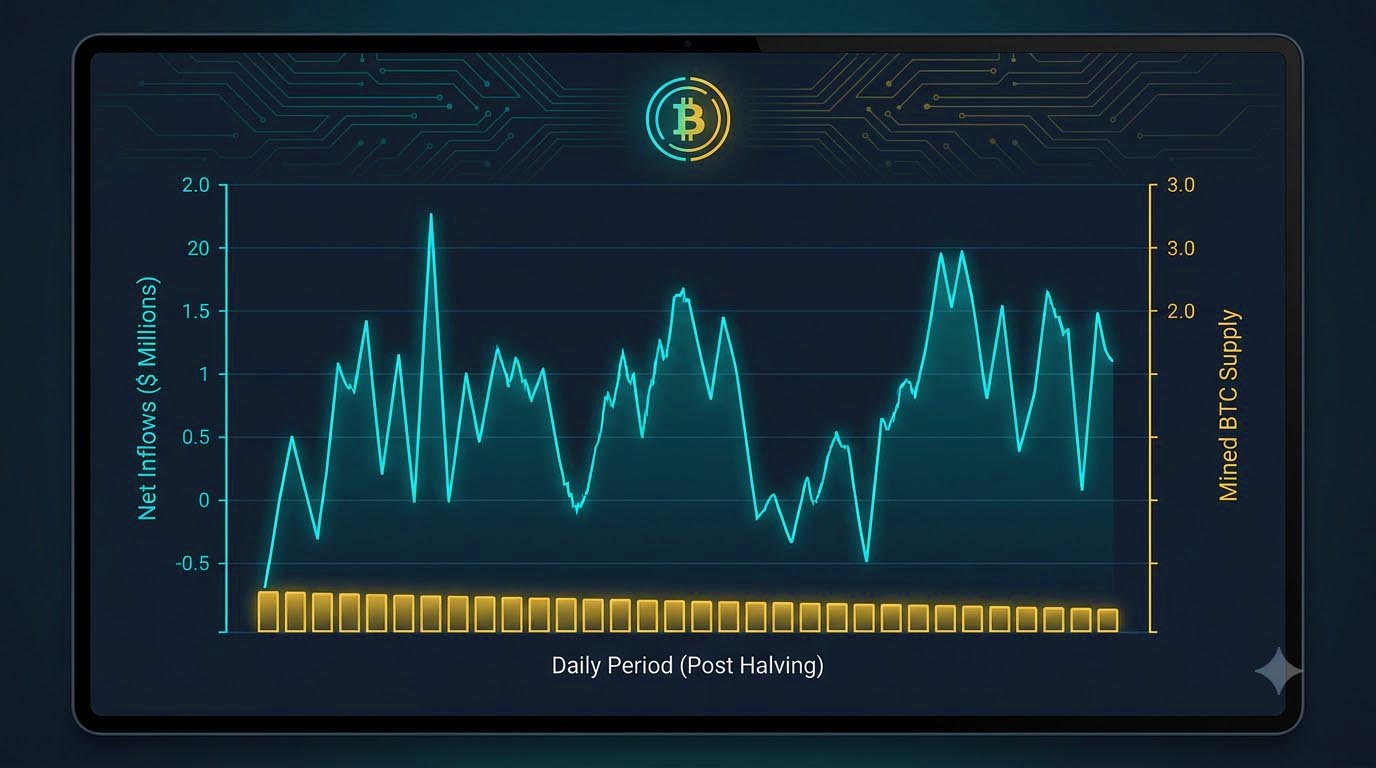
As available liquid supply on cryptocurrency exchanges declines to multi-year lows, even modest increases in daily buying pressure can trigger rapid upward price discovery moves.
Risk Management & Position Sizing Guidelines
While Bitcoins long-term macro thesis remains strong, risk management is essential:
- Limit Portfolio Allocation: Maintain crypto allocations between 1% and 5% of total liquid net worth to prevent volatility from disrupting overall financial plans.
- Avoid High-Leverage Trading: Derivatives leverage often causes liquidation cascades during sharp market pullbacks. Spot accumulation remains the safest strategy.
- Implement Systematic DCA: Use dollar-cost averaging to accumulate positions over time rather than attempting to time short-term market fluctuations.
Disclaimer: Digital assets are highly volatile. This content is for educational purposes only and not financial advice.
💡 Further Reading for Investors:
Want to master growth stock valuations and competitive moats?
Check out
The Intelligent Investor by Benjamin Graham – https://amzn.to/4huFG8x
One Up On Wall Street by Peter Lynch – https://amzn.to/4huFLJn
The Psychology of Money by Morgan Housel – https://amzn.to/4fWa9d2
Principles for Navigating Big Debt Crises by Ray Dalio – https://amzn.to/4fZGTCl
Data & Reference Sources
- Glassnode On-Chain Analytics: Bitcoin Supply Distribution, MVRV Z-Score & Halving Cycle Metrics
- Federal Reserve Economic Data (FRED): M2 Money Supply Growth & Macro Liquidity Correlation Data
- U.S. Securities and Exchange Commission (SEC): Spot Bitcoin ETF Filings & Institutional Asset Allocation Statements