

When the Federal Reserve rate cuts the benchmark Fed Funds Rate, borrowing costs decline across consumer credit, corporate debt, and mortgage facilities. Historically, this monetary easing cycle triggers a profound sector rotation, driving massive capital inflows into rate-sensitive equities that were previously suppressed during periods of high interest rates. In this deep dive, we analyze 3 key stock market sectors poised for explosive outperformance as central bank rate cuts take effect.
Central bank monetary policy shifts represent the single most impactful macro driver for global financial markets. Following one of the most aggressive interest rate hiking cycles in modern economic history to combat post-pandemic inflation, the Federal Reserves transition toward systematic monetary (rate cut) easing is fundamentally altering capital allocation across asset classes.
You might also like – Is the Stock Market About to Crash? 3 Critical Warning Signals Every Investor Must Watch Right Now
1. Real Estate Investment Trusts (REITs) & Commercial Property
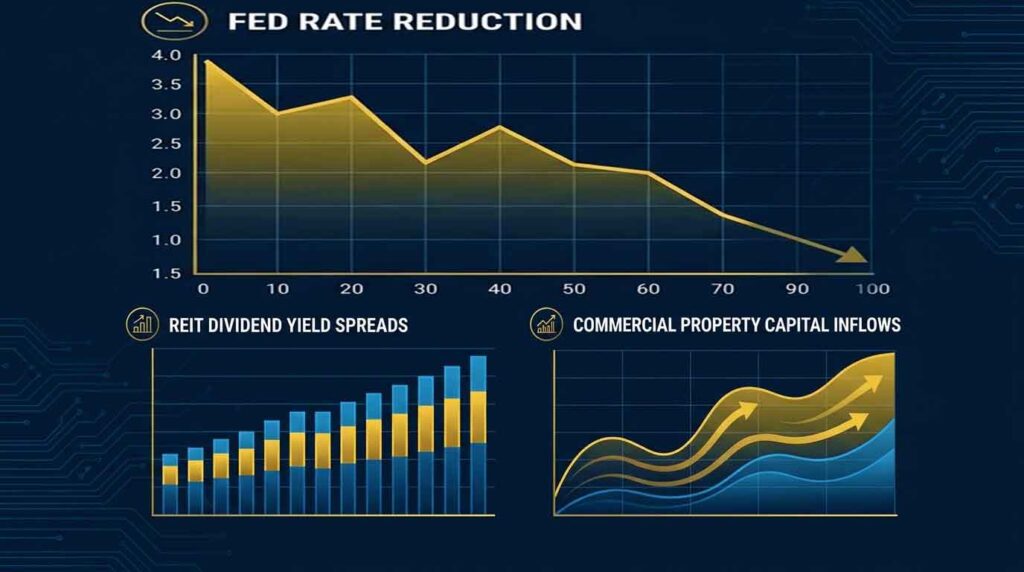
Real Estate Investment Trusts (REITs) suffered severely during the Feds tightening cycle. As risk-free short-term Treasury yields rose above 5%, institutional investors abandoned 4%-5% REIT dividend yields in favor of guaranteed government debt. Simultaneously, higher interest rates increased debt refinancing costs across commercial real estate portfolios.
As the Fed slashes interest rates, this dynamic reverses rapidly:
- Yield Spread Expansion: Falling Treasury yields make 5%+ REIT dividend yields highly competitive, sparking institutional yield-chasing capital flows.
- Refinancing Relief: Lower interest rates reduce interest expense drag on debt-heavy real estate balance sheets, immediately improving Funds From Operations (FFO) metrics.
- Sub-Sector Opportunities: Industrial logistics warehouses, data center real estate, and triple-net lease residential REITs stand out as high-conviction opportunities.
2. Small-Cap Equities & Growth Stocks (Russell 2000)
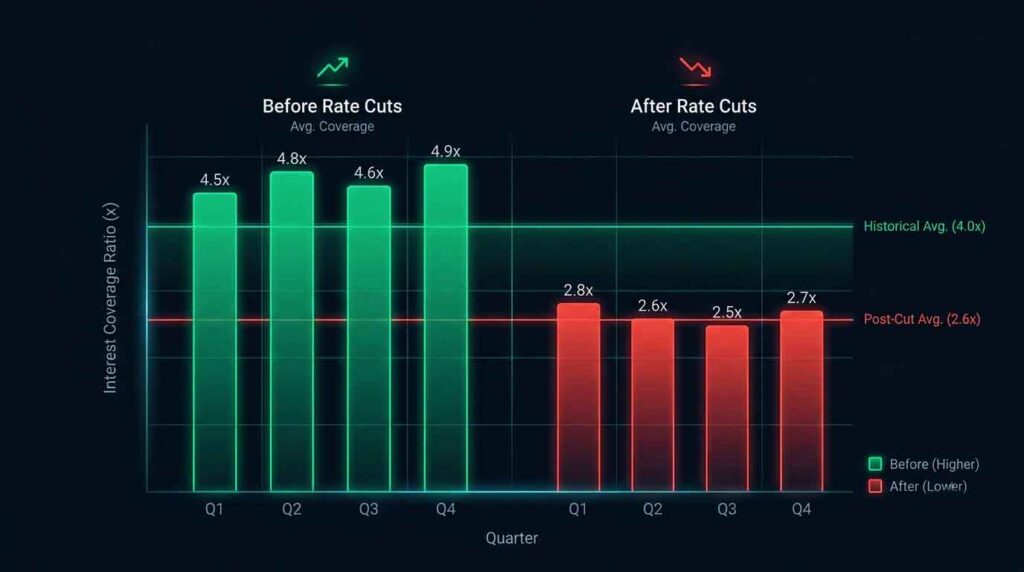
Mega-cap technology giants possess fortress balance sheets with billions in cash reserves, allowing them to earn interest income during high-rate environments. Conversely, small-cap companies within the Russell 2000 index rely heavily on short-term floating-rate debt to fund daily operations and growth initiatives.
Roughly 30% to 40% of debt held by small-cap companies is tied to variable interest rates. As benchmark interest rates decline, small-cap debt service costs plunge, directly expanding net profit margins. Historically, small-cap equities experience powerful multi-quarter rallies following the onset of Fed easing cycles.
3. Utilities & High-Yield Income Equities
Utility companies operate capital-intensive business models requiring continuous debt issuance to build power grids, renewable energy installations, and water infrastructure. Lower interest rates reduce annual interest payments on corporate bonds, lowering cost-of-capital requirements for utility providers.
In addition, growing power demand from artificial intelligence data centers is creating an unprecedented growth catalyst for electric utility providers. Combined with falling interest rates, utility stocks offer an attractive blend of steady dividend income and secular growth.
Portfolio Execution Strategy for Investors
To capitalize on rate-cut sector rotations without taking unmanaged risk, consider the following allocation framework:
- Gradually Rebalance Out of Cash Reserves: High-yield savings accounts (HYSAs) and money market funds will see interest rates drop quickly. Shift excess liquidity into dividend-growing equities before yields fall.
- Utilize Sector ETFs for Diversification: Gain broad exposure to rate-sensitive sectors using liquid funds such as VNQ (Real Estate), IWM (Small-Cap Growth), and XLU (Utilities).
Disclaimer: Educational commentary only. Sector performance during monetary easing cycles varies based on macroeconomic conditions.
💡 Further Reading for Investors:
Want to master growth stock valuations and competitive moats?
Check out
The Intelligent Investor by Benjamin Graham – https://amzn.to/4huFG8x
One Up On Wall Street by Peter Lynch – https://amzn.to/4huFLJn
The Psychology of Money by Morgan Housel – https://amzn.to/4fWa9d2
Principles for Navigating Big Debt Crises by Ray Dalio – https://amzn.to/4fZGTCl
Data & Reference Sources
- Federal Reserve Economic Data (FRED): Federal Funds Effective Rate (FEDFUNDS) Macroeconomic Data
- S&P Dow Jones Indices: S&P 500 Sector Weighting & Real Estate Performance Reports
- Cboe Volatility Index (VIX): Cboe Volatility Index & Rate Expectation Analytics




Pingback: Top 3 Safe Dividend Stocks Yielding Over 6%
Pingback: 3 Proven Reasons gold price Stocks Will Skyrocket in 2026