

The Mirae Asset NYSE FANG+ ETF gives you direct exposure to America’s biggest tech companies. Think Apple, Microsoft, Amazon, and Netflix—all in one fund. Moreover, you can buy it right here in India through platforms like Groww or Zerodha. Consequently, you avoid hefty currency conversion fees. Additionally, this fund has delivered a stunning 78% return in just one year. However, is it the right choice for your portfolio? Let’s break it down.
What Makes NYSE FANG+ ETF Different?
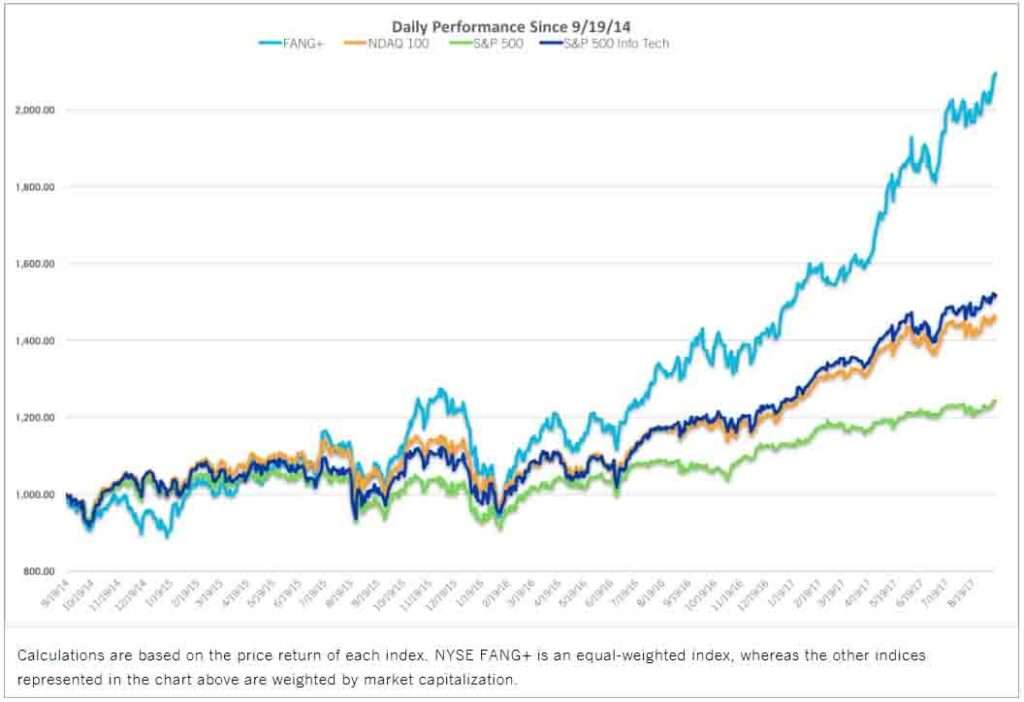
Unlike regular S&P 500 funds, this one focuses purely on top tech leaders. Furthermore, it tracks only 10 stocks—not hundreds. Therefore, your money goes directly into proven winners.
The fund holds equal weights across all stocks. Thus, smaller companies get the same importance as giants like Apple. This approach offers better balance. In contrast, traditional funds let big companies dominate.
Here’s what you get:
- CrowdStrike (cybersecurity leader)
- NVIDIA (AI chip maker)
- Apple (consumer tech giant)
- Microsoft (cloud computing king)
- Netflix (streaming pioneer)
Additionally, the fund includes Alphabet, Amazon, Meta, Broadcom, and ServiceNow. Basically, you’re investing in the future of technology.
Breaking Down The Numbers of NYSE FANG+ ETF: Performance Analysis
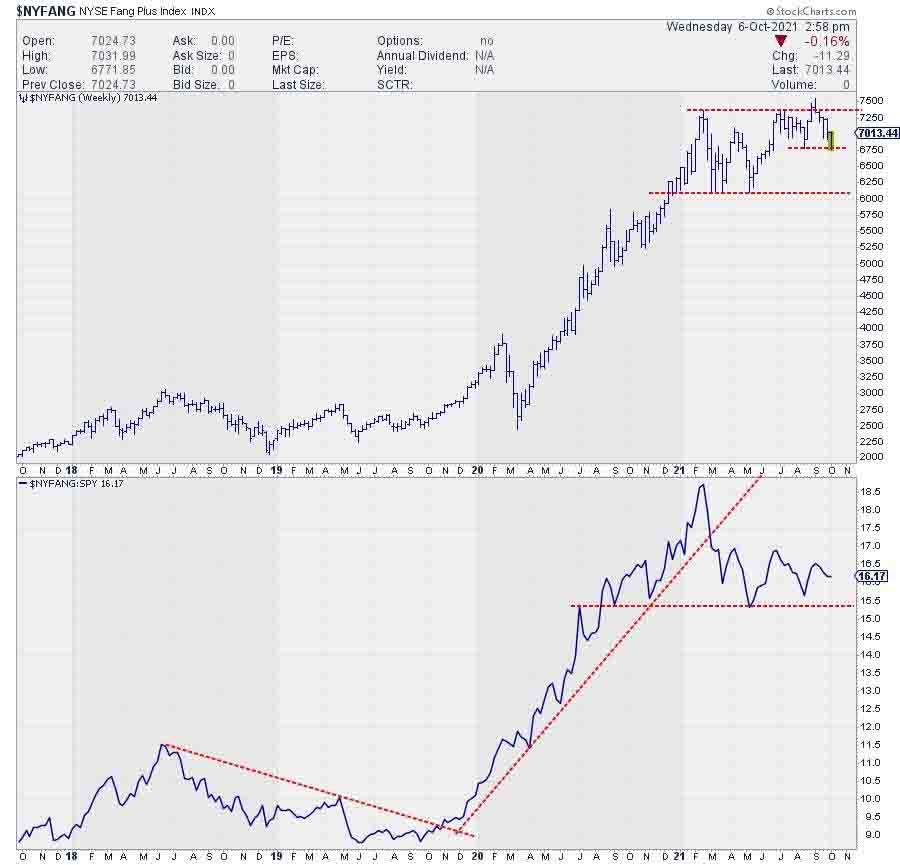
Let’s talk returns. Notably, this fund crushed most expectations.
Recent Performance:
- Past 1 week: 5.1%
- Past 1 month: 5.5%
- Past 3 months: 15%
- Past 6 months: 44%
- Past 1 year: 78%
- Past 3 years: 305%
Moreover, since its launch in May 2021, it has delivered 205% returns. That means ₹10,000 became ₹30,500 in just over four years. Clearly, these are impressive numbers.
However, past performance doesn’t guarantee future results. Nevertheless, the trend shows strong momentum.
Understanding NYSE FANG+ ETF Core Holdings
The fund maintains equal distribution across 10 tech stocks. Currently, here’s how your money gets allocated:
Top Holdings (September 2025):
- CrowdStrike: 10.96%
- NVIDIA: 10.91%
- Apple: 10.61%
- Microsoft: 10.12%
- Netflix: 9.72%
Additionally, each stock gets rebalanced quarterly. Therefore, no single company dominates your investment. This strategy reduces concentration risk significantly.
Furthermore, all companies operate in high-growth sectors. Specifically, they focus on cloud computing, AI, streaming, and cybersecurity. Thus, you’re betting on tomorrow’s technology today.
Cost Structure of NYSE FANG+ ETF: What You Actually Pay
Expense ratio matters a lot for long-term returns. Fortunately, this fund keeps costs reasonable.
Key Cost Details:
- Expense ratio: 0.65%
- Exit load: 0%
- Minimum investment: ₹1,000
- No currency conversion fees
Comparatively, US-focused funds charge between 0.5% to 1%. Therefore, this fund sits in the middle range. Additionally, you save heavily on forex charges since you invest in INR.
Moreover, zero exit load means you can sell anytime without penalty. Thus, you maintain full flexibility with your investment.
Risk Assessment: What Could Go Wrong?
Every investment carries risk. Notably, this fund comes with “Very High Risk” rating. Here’s why.
Primary Risk Factors:
First, concentration risk exists. Since only 10 stocks comprise the fund, poor performance from even two companies impacts returns significantly.
Second, tech sector volatility remains high. When markets correct, tech stocks typically fall harder. Consequently, your portfolio could see sharp drops.
Third, currency fluctuation affects returns. Although you invest in INR, the underlying stocks trade in USD. Therefore, rupee-dollar movement impacts your gains.
Additionally, geopolitical tensions could hurt US tech companies. Regulations, trade wars, or policy changes create uncertainty.
Standard Deviation: The fund shows 26.44% volatility versus 9.84% category average. Clearly, it’s much more volatile than regular equity funds.
Who Should Consider This Investment?
This fund suits specific investor profiles. Specifically, consider it if you:
Ideal Investor Profile:
- Have high risk tolerance
- Believe in US tech dominance
- Want international diversification
- Can hold for 5+ years
- Already have solid Indian equity exposure
Conversely, avoid this fund if you:
- Need stable, predictable returns
- Can’t handle 20-30% drawdowns
- Invest for short-term goals
- Have limited emergency savings
Moreover, never put all your money into one fund. Instead, treat this as a satellite holding in your portfolio. Ideally, limit it to 10-20% of total equity allocation.
How To Invest: Simple Steps for Beginners
Getting started takes just minutes. Here’s the exact process.
On Groww:
- Open the Groww app
- Search “Mirae Asset NYSE FANG+ ETF”
- Choose direct plan
- Enter investment amount
- Set up SIP or invest lumpsum
On Zerodha:
- Log into Zerodha Coin
- Find the fund in mutual funds section
- Select direct growth option
- Complete KYC if needed
- Start investing
Additionally, you can set up monthly SIPs starting from ₹1,000. Therefore, you don’t need large capital to begin. Furthermore, SIPs help average out volatility through rupee cost averaging.
Stylized illustration representing Exchange Traded Fund (ETF) investments with financial icons and stock chart elements
Comparing With Alternative Tech Funds
Several other options exist for US tech exposure. Let’s compare them.
Popular Alternatives:
Motilal Oswal Nasdaq 100 FOF:
- Tracks 100 tech stocks
- Expense ratio: 0.58%
- More diversified
- Lower volatility
Franklin US Opportunities Fund:
- Actively managed
- Includes mid-caps
- Higher expense ratio
- Flexible stock selection
Mirae Asset S&P 500 Top 50 ETF:
- Broader sector exposure
- Includes non-tech stocks
- Lower concentration risk
- Steadier returns
Notably, the NYSE FANG+ ETF offers more focused exposure. Consequently, it delivers higher returns but with increased volatility. Therefore, your choice depends on risk appetite.
Tax Implications for Indian Investors
Understanding tax rules helps maximize after-tax returns. Here’s what you need to know.
Currently, international equity funds follow different tax treatment. Specifically, they’re taxed as debt funds. Consequently:
- Short-term gains (under 3 years): Taxed at your income slab
- Long-term gains (over 3 years): 20% with indexation benefit
However, tax laws keep changing. Therefore, always consult your CA for current rules. Additionally, maintain proper documentation for all transactions.
Smart Investment Strategies: Making It Work
Simply buying isn’t enough. Instead, follow these proven strategies.
Strategy 1: SIP Approach
Invest ₹3,000-5,000 monthly through SIP. Consequently, you average out market volatility. Moreover, you avoid timing the market incorrectly.
Strategy 2: Core-Satellite Method
Keep 70% in Indian equity funds (core). Allocate 20-30% to international funds like this (satellite). Thus, you maintain stability while capturing global growth.
Strategy 3: Rebalancing Discipline
Review portfolio every 6 months. If this fund grows beyond target allocation, book some profits. Subsequently, reinvest into underperforming assets.
Additionally, never invest money needed within 3 years. Instead, treat this as long-term wealth creation tool.
Current Market Conditions: Timing Your Entry
Right now, US tech stocks trade near all-time highs. Consequently, many investors wonder about entry timing.
Current Market Snapshot:
- S&P 500: Near historic peaks
- Nasdaq: Also at elevated levels
- Tech valuations: Higher than historical average
However, timing the market perfectly is impossible. Moreover, staying out means missing potential gains. Therefore, consider starting with small amounts.
Furthermore, use SIP to gradually build position. This approach reduces timing risk significantly. Additionally, if markets correct, you buy more units at lower prices.
Long-term Wealth Creation Potential
Let’s look at realistic long-term scenarios. Assume you invest ₹5,000 monthly through SIP.
Projection Based on Historical Returns:
If fund delivers 25% annual returns (conservative estimate based on 3-year average):
- After 5 years: ₹5.6 lakhs (invested ₹3 lakhs)
- After 10 years: ₹23 lakhs (invested ₹6 lakhs)
- After 15 years: ₹67 lakhs (invested ₹9 lakhs)
However, remember these are projections, not guarantees. Additionally, returns will fluctuate significantly year-to-year. Nevertheless, the power of compounding works brilliantly over decades.
Final Verdict: Should You Invest?
This fund offers excellent exposure to US tech leadership. Moreover, it has delivered exceptional historical returns. Additionally, buying through Indian platforms eliminates forex hassles.
However, it carries very high risk. Furthermore, current valuations seem stretched. Consequently, proceed cautiously.
Bottom Line: Consider this fund if you want aggressive growth and can handle volatility. Start with small amounts through SIP. Moreover, limit allocation to 10-20% of equity portfolio. Finally, invest only money you won’t need for 5+ years.
👉 You Might also find this post insightful – https://bosslevelfinance.com/qqqm-quietly-soaring-the-secret-etf-winners-are-adding-now
👉 Create a Vested Account today to start investing in US Stocks – https://refer.vestedfinance.com/RUKU88007
Important Disclaimer: This analysis is for educational purposes only. We do not encourage you to buy, sell, or hold any investments. Stock markets are subject to market risks and can be volatile. Always do your own due diligence before investing. Consider consulting a certified financial advisor for personalized advice based on your specific financial situation and goals.
💡 Further Reading for Investors:
Want to master growth stock valuations and competitive moats?
Check out
The Intelligent Investor by Benjamin Graham – https://amzn.to/4huFG8x
One Up On Wall Street by Peter Lynch – https://amzn.to/4huFLJn
The Psychology of Money by Morgan Housel – https://amzn.to/4fWa9d2
Principles for Navigating Big Debt Crises by Ray Dalio – https://amzn.to/4fZGTCl
Sources:
- https://www.moneycontrol.com/mutual-funds/nav/mirae-asset-nyse-fang+-etf-fof-direct-plan-/MMA215
- https://www.moneycontrol.com/mutual-funds/nav/mirae-asset-nyse-fang+-etf-regular-plan-/MMA216
- https://groww.in/etfs/mirae-asset-nyse-fang-etf
- https://www.tickertape.in/etfs/mirae-asset-nyse-fang-etf-MAFAN
- https://microsectors.com/fang/
- https://www.miraeassetmf.co.in/mutual-fund-scheme/etf-and-fof/mirae-asset-nyse-fang-plus-etf
- https://stackwealth.in/mutual-funds/mirae-asset-nyse-fang-etf
- https://en.stockq.org/index/NYFANG.php
- https://www.paytmmoney.com/mutual-funds/scheme/mirae-asset-nyse-fang-etf-fof-direct-growth/inf769k01hh0
- https://www.moneycontrol.com/mutual-funds/nav/mirae-asset-nyse-fang+-etf-fof-direct-plan-/MMA215
- https://www.moneycontrol.com/mutual-funds/nav/mirae-asset-nyse-fang+-etf-regular-plan-/returns/MMA216
- https://stackwealth.in/mutual-funds/mirae-asset-nyse-fang-etf
- https://www.mfonline.co.in/mf-research/mirae-asset-nyse-fang-and-etf
- https://www.moneycontrol.com/mutual-funds/mirae-asset-nyse-fang+-etf-regular-plan-/portfolio-overview/MMA216
- https://www.mstock.com/mutual-fund-investments/mirae-asset-nyse-fang-etf/mf6305
- https://www.tickertape.in/etfs/mirae-asset-nyse-fang-etf-MAFAN
- https://microsectors.com/fang/
- https://www.moneycontrol.com/mutual-funds/nav/mirae-asset-nyse-fang+-etf-regular-plan-/MMA216
- https://groww.in/etfs/mirae-asset-nyse-fang-etf
- https://www.morningstar.com/etfs/xasx/fang/quote
- https://economictimes.com/mirae-asset-nyse-fang-etf/mffactsheet/schemeid-41429.cms
- https://www.tickertape.in/mutualfunds/mirae-asset-nyse-fangetf-fof-M_MINA
- https://en.stockq.org/index/NYFANG.php
- https://www.bajajfinserv.in/investments/mirae-asset-nyse-fang-etf
- https://www.valueresearchonline.com/funds/41429/mirae-asset-nyse-fang-etf/
- https://etfdb.com/index/nyse-fangtm-index/
- https://www.miraeassetmf.co.in/mutual-fund-scheme/etf-and-fof/mirae-asset-nyse-fang-plus-etf
- https://www.miraeassetmf.co.in/mutual-fund-scheme/nav-archive/mirae-asset-nyse-fang-plus-etf